Allerian Liopleurodon
The Allerian Liopleurodon is the most massive creature discovered on Allerias Beta. It measures over a hundred meters in length, and is estimated to weigh over 200 metric tons. They roam the vast open ocean in their massive territories. They eat just about anything that swims near them. Lizard-Foxes often become snacks for the Liopleurodon, along with the vast array of marine life. They need to protect vast areas of the ocean in order to support their appetites. They never interact unless it is mating season, which only happens every ten Allerian years. They will fight to the death if they cross paths in any other time.
The mothers keep their young with them for about five Allerian years, until the young are too big to share territory with, and then the mother will drive the youth away. The average lifespan of one of these giants is a hundred Allerian years.
Absolutely nothing threatens one of these other than another Liopleurodon. They bear a very strong resemblance to the Liopleurodons that used to inhabit our prehistoric oceans. These ones bear more fish-like qualities, their fins in particular. Their exact colour is yet unknown since they rarely surface. They do have a translucent quality to their skin, which makes them a master of camouflage. Their streamlined body allows them to pass through the water with little effort or sound. Their prey is constantly trying to stay ahead of them with acute hearing and other sensory organs, but the success is minimal. The Liopleurodon always gets its meal.
It has no interaction with the land animals other than the Lizard-Fox, which is like a piece of candy to it. It tends to avoid the underwater volcanic regions, since the water temperature is too hot for comfort. It also avoids the polar regions, where the water can get slightly too cold in the winter.
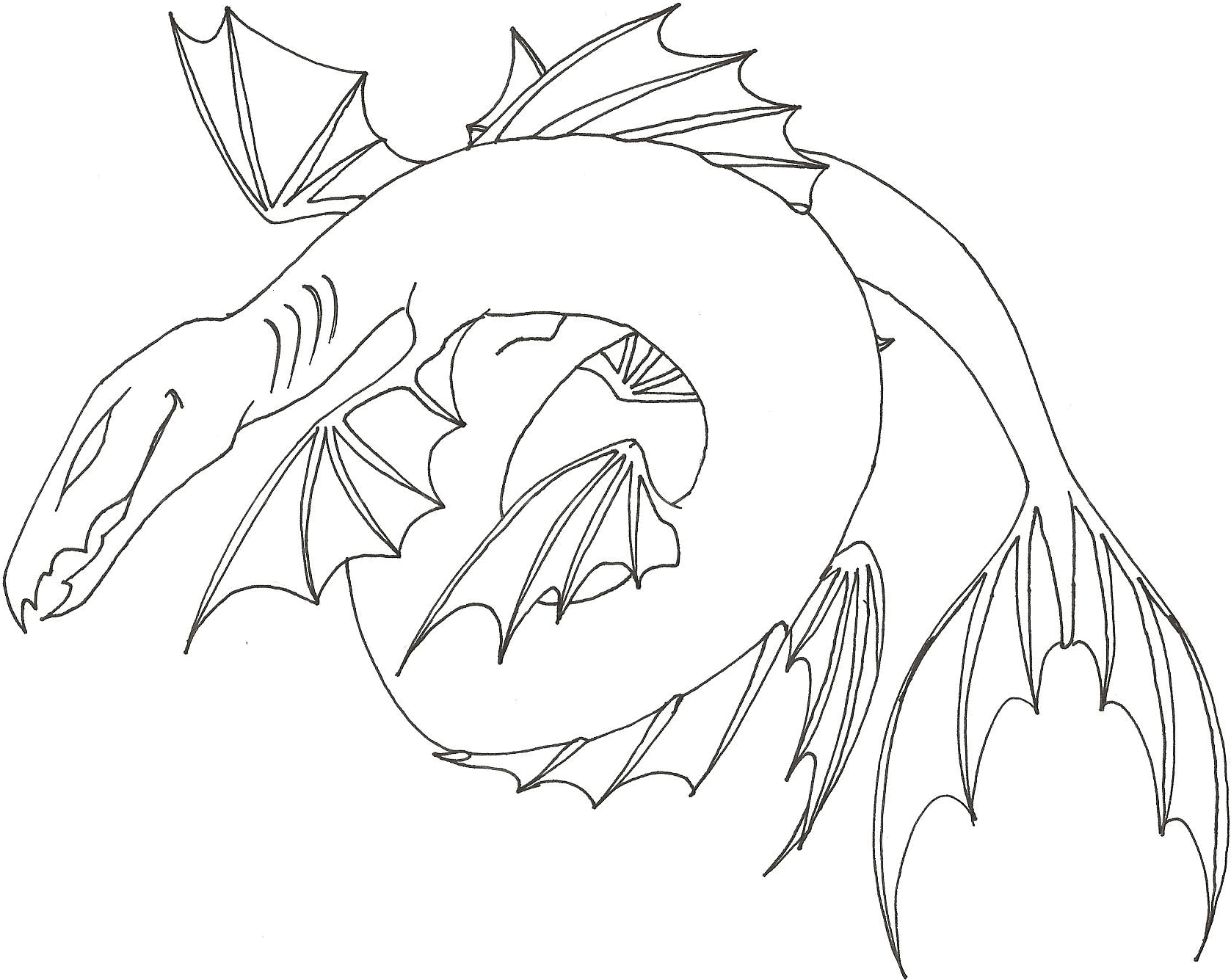 NOTE: Due to the Allerian Liopleurodon's ferocious nature, nobody has been able to get close enough to see the exact color of the Liopleurodon. However, it is believed that it is fairly translucent, taking on the colors of the sea.